Table Of Content
- Accomplish your course creation and student success goals faster with Thinkific.
- What does UDL look like in the classroom?
- What is Universal Design for Learning? & 7 UDL Examples
- Do I need to be certified in special education to use UDL in my classroom?
- Bringing universal design to the classroom
- Universal Design for Learning Strategies and Examples for the Classroom
Watch this video to see what UDL looks like in a fifth-grade classroom. To connect directly with our partners for teaching support or for help with Ohio State eLearning tools, visit our help forms. Remember, however, that UDL isn’t about last-minute individual accommodations so much as big-picture planning.
Utilizing Adult Learning Principles and Universal Design for Learning to Advance Student Success - Faculty Focus
Utilizing Adult Learning Principles and Universal Design for Learning to Advance Student Success.
Posted: Mon, 06 Mar 2023 08:00:00 GMT [source]
Accomplish your course creation and student success goals faster with Thinkific.
As we’ve seen, using this method in your school will help all students to learn in the way that works best for them, improving their knowledge of the subjects they’re learning. In order to correctly apply universal design for learning in the classroom, it’s important for teachers to be aware of the strengths and weaknesses of each student. This principle of universal design for learning takes into account the differences of students’ manner of expression. Teachers who use UDL in their classrooms see improvements in student engagement and learning. UDL allows teachers to provide the flexibility that students need without stigma and in a format that suits students’ individual needs and learning styles.
What does UDL look like in the classroom?
This means allowing students to express themselves in different ways. For example, you might allow students to use other forms of communication, such as speaking, writing, and drawing. Differentiating instruction is another crucial way to use UDL in your classroom. This means providing students with different levels of teaching and support based on their needs.
What is Universal Design for Learning? & 7 UDL Examples
With over 4,000 fun games and activities, it’s the perfect balance of learning and play for your little one. Don’t rely on students arriving equipped with their own assistive toolset. Many will come prepared, but be ready for those that need guidance. Providing flexible content that doesn’t depend on one particular sensory input.
Do I need to be certified in special education to use UDL in my classroom?
Examples of UD are so commonplace in our daily lives that they escape our notice—wide walkways, sidewalk ramps, and automated doors are a few that come to mind. At its core, UDL is a mindset, or set of beliefs, that guides educators in everything they do. It’s all about believing—in students and their potential; in the importance of the process as much as the result; and in the power of continual growth, reflection, and lifelong learning. For example, if your students typically struggle with a new concept after you present it, you could make a short video recording of key ideas. Make sure that there are options regularly available for any student to use as needed.
Group work can help students to reinforce skills by teaching others, it can also improve their collaborative and social-emotional learning skills too. When there are several students who share the same learning style or who have common interests, these can be grouped together for specific activities in the classroom. This can still allow for flexibility in the order or time spent on subtasks, but helps students to know exactly where they are in the lesson. With this kind of flexibility, students have access to the material that best suits their needs. This is useful for children with disabilities such as dyslexia, as well as for average students who simply perform better when listening to instruction than when reading, for example. CAST (opens in a new window) develops innovative approaches to education based on the principles of Universal Design for Learning (UDL).
Think carefully about how you will accomplish the above when designing and building your course. The proactive approach to preventing barriers to access is an essential component of UDL. Institutional accommodations, such as those provided through Student Life Disability Services, can and should complement UDL.
Bringing universal design to the classroom
The UDL Project seeks to provide the easiest way for communities to implement universal design in areas not regulated by the Americans with Disabilities Act (ADA). Teachers can evaluate students’ progress based on any of these things, providing students with a level of comfort while also doing what’s necessary to make sure that students are progressing. Some students may be able to learn new concepts with standard material such as a textbook or a worksheet. Others may need accommodations to provide them with the same opportunity to learn. The Thinkific $1 Million Entrepreneur Growth Fund provides entrepreneurs funding, support and expertise needed to grow a business with online education. His work has involved designing teacher certification for Trinity College in London and in-service training for state governments in the United States.
For digital text, there are also options for text enlargement, along with choices for screen color and contrast. While universal design for learning offers a great vision for accessible education, it’s often critiqued as being too unrealistic. After all, the amount of differentiation required for every single lesson seems almost impossible. The goal of UDL is to use a variety of teaching methods to remove any barriers to learning.
It’s true that some students will have more trouble with certain aspects of a lesson than others. But, instead of simply getting frustrated and giving up, students need to know when to ask for help. • Allow students to show what they know through a variety of formats, such as a poster presentation or a graphic organizer.
UDL recognizes the diversity of students’ intelligence, interests, learning styles, prior knowledge, language skills, and physical abilities. With UDL, students get feedback — often every day — on how they’re doing. That’s why in a UDL classroom, there are flexible work spaces for students. This includes spaces for quiet individual work, small and large group work, and group instruction. If students need to tune out noise, they can choose to wear earbuds or headphones during independent work.
Now in part through advances in technological ubiquity and accessibility tools, universal design is bridging the gap for populations. Universal Design for Learning (UDL) is an approach to teaching aimed at meeting the needs of every student in a classroom. It can be helpful for all kids, including kids with learning and attention issues. Universal Design for Learning (UDL) is a framework developed by CAST, an Understood founding partner. UDL guides the design of learning experiences to proactively meet the needs of all learners. When you use UDL, you assume that barriers to learning are in the design of the environment, not in the student.
It ensures classrooms and educational activities have accessibility embedded in them, so accessibility is a design feature of education rather than an afterthought or augmentation. It may sound like UDL is about finding one way to teach all students. One of the most important interactions students share with you is in the work they complete throughout the term.
This principle encompasses the ideas of motivation, building on the interests of the students. The area of engagement also helps students to see the reasons why they should learn what they’re learning, and makes it relevant to their life. Assure families that you have high expectations for all students to become expert learners in your classroom. And explain that you’ll keep working with the students and their families to build the skills and interest to make that happen.
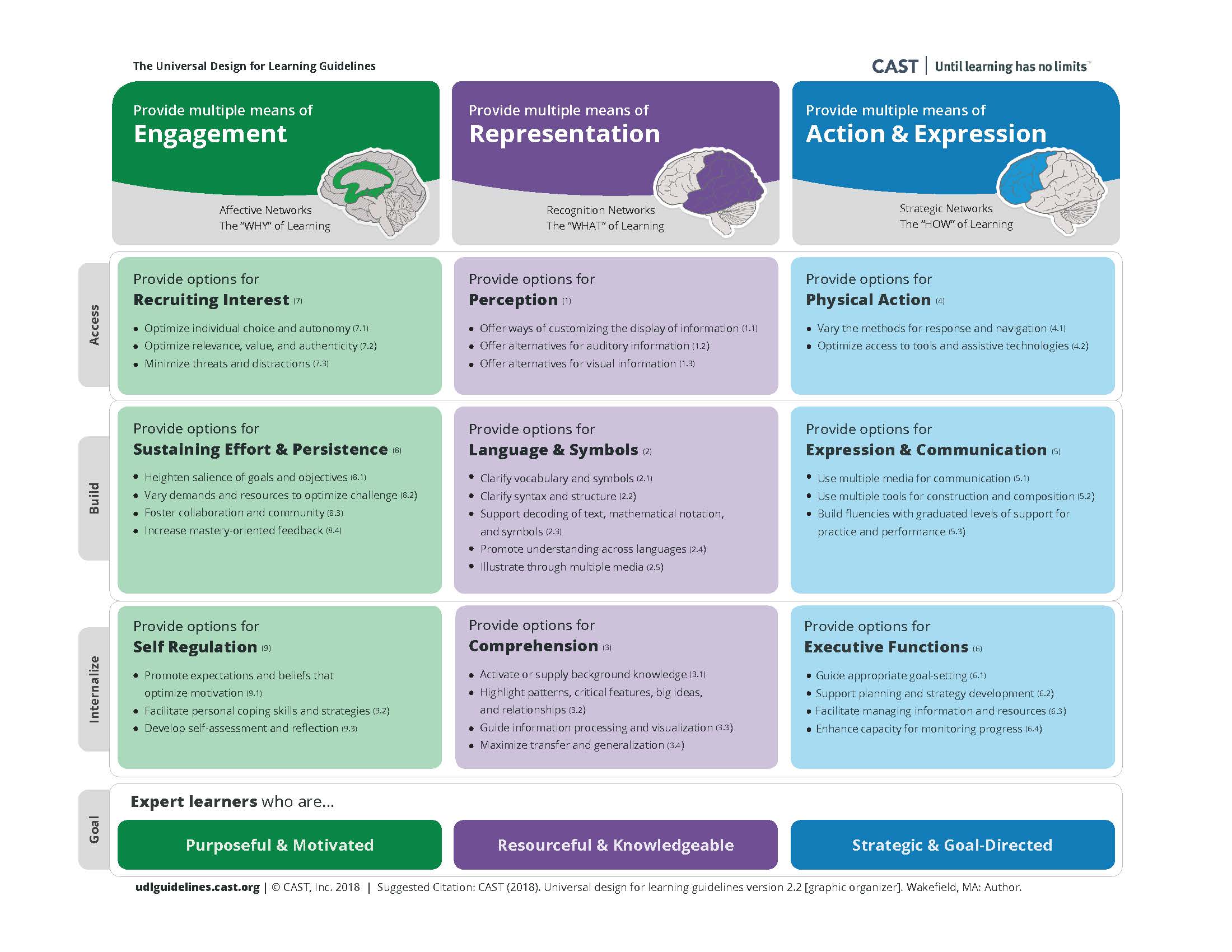
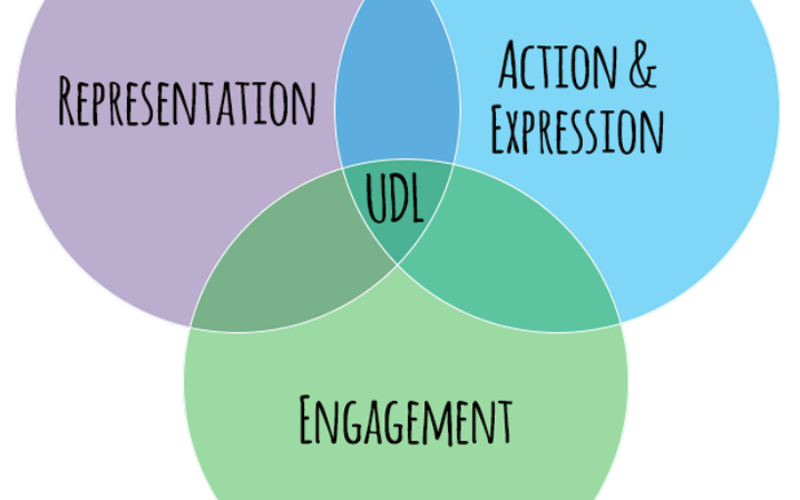
So, when hearing the term universal design for learning(or UDL), it makes sense to imagine it as a blanket format that covers all students. CAST developed UDL guidelines that are based on three main principles that align with these learning networks. The three UDL principles are engagement, representation, and action and expression. UDL is a powerful approach because from the very start of your lesson, it helps you anticipate and plan for all your learners. It can help you make sure that the greatest range of students can access and engage in learning — not just certain students.
Finally, one of the best ways to use UDL in your classroom is to encourage student participation. This means allowing students to share their ideas and providing them with feedback. For example, you might give students a forum to discuss class topics or ask them to contribute ideas for assignments. Leave room in your content for students to have their own aha moments. Create activities that offer reflection and connection to their unique situation.



No comments:
Post a Comment