Table Of Content
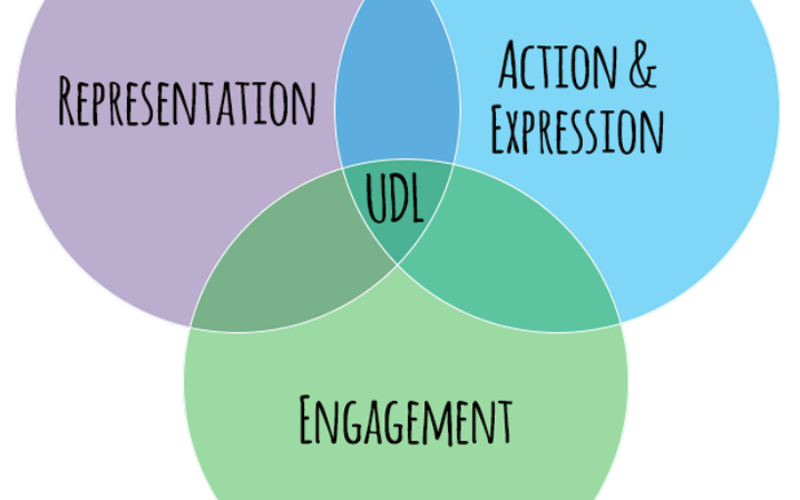
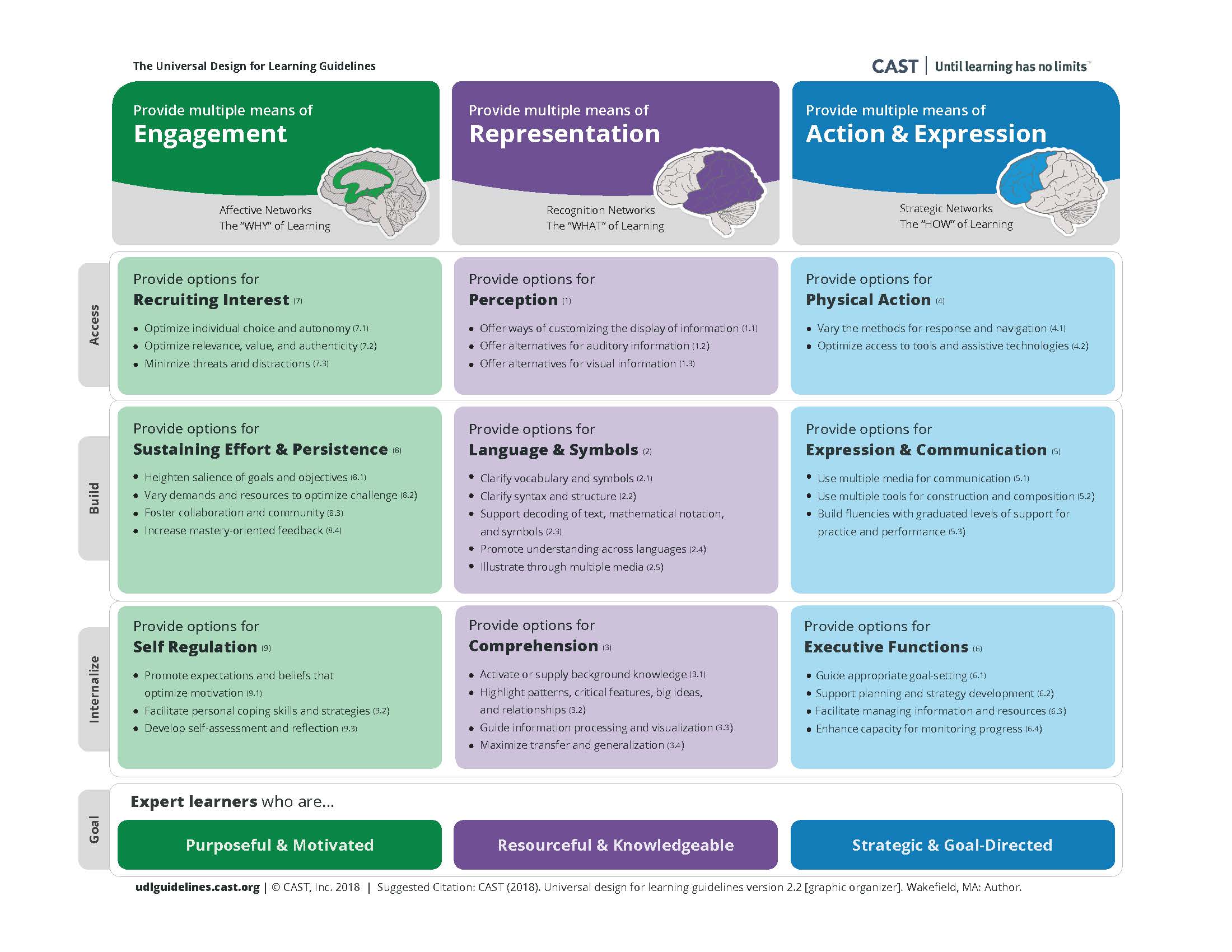
For example, with digital content on the computer, students can be allowed to control with voice, joystick, or an adaptive keyboard when necessary. That way, each student gets to complete the assignment in the way that is best for them, while all students demonstrate a reasonable understanding of the topic. For example, students who prefer to create a video instead of completing a written essay can be grouped together to create a video project together. Everything starts with how students engage with the class and the subject. UDL describes human variability based on parts of the brain that manage the “why” (affective network), the “what” (recognition network), and the “how” (strategic network) of learning. Watch as CAST co-founder David Rose explains why UDL emphasizes variability instead of disability.
Teach Online
Integrating support, choice, and flexibility in course activities and assessments will benefit all of your students. Learn more about best practices for Designing Assessments of Student Learning. As you create your course, review your materials to ensure that students won't miss information if they opt for different means of representation. To understand what Universal Design for Learning (UDL) is, it helps to understand what it’s not.
Regular feedback
Adaptability in this area also applies to deaf and hearing-impaired students. Teachers can also provide visual aids to help clarify vocabulary that is unfamiliar to students, or provide multilingual students with dictionaries either in paper or digital format. ESL students can be disadvantaged in assessments due to language barriers, even if they have a strong command of the topic. Following the information above, teachers should now be aware of how their students learn best.
Build a Strong Learning Culture on Your Team - HBR.org Daily
Build a Strong Learning Culture on Your Team.
Posted: Tue, 06 Jun 2023 07:00:00 GMT [source]
Examples of representation in UDL
But while accommodations happen on a case-by-case basis per legal requirements, UDL is a holistic course design framework. For example, closed captioning on TVs allows people with hearing impairments to see onscreen text of what is being said. If you’ve ever tried to watch the news or a game in a noisy restaurant, you probably used the closed captions to follow along. For purposeful, motivated learners, stimulate interest and motivation for learning. Waterford.org is a 501(c)(3)organization, and gifts aretax deductible as allowed by law. In all aspects of life, students must learn to separate critical information from information that isn’t as important.


Guest speakers can come to class and discuss the special significance of various customs and traditions. Taking a quick peek into a classroom today in the U.S. and Canada, and one can see students from a wide array of cultural backgrounds. This includes beanbags, floor mats, stools, therapy balls, peanut seats, and a whole lot more.
Multiple Means of Engagement
It’s about building in flexibility that can be adjusted for every person’s strengths and needs. There’s a lot of uncertainty around the future of work and our world. The ultimate goal of UDL is to develop “expert learners” who are purposeful and motivated, resourceful and knowledgeable, and strategic and goal-directed. When teaching, I aimed to address many barriers before we began a unit.
Increased Engagement and Participation
This lesson has three main objectives — to have your students read, learn the stages of butterfly metamorphosis, and draw a scientific process. To analyze the goal, you need to identify the primary objective for this part of the lesson. For example, a history teacher may want students to show an understanding of the events that led to World War 2. He could give his students the option to complete a written test, to create a video ‘reporting’ on the events, or to draw a comic strip that shows which main events led to the start of the war.
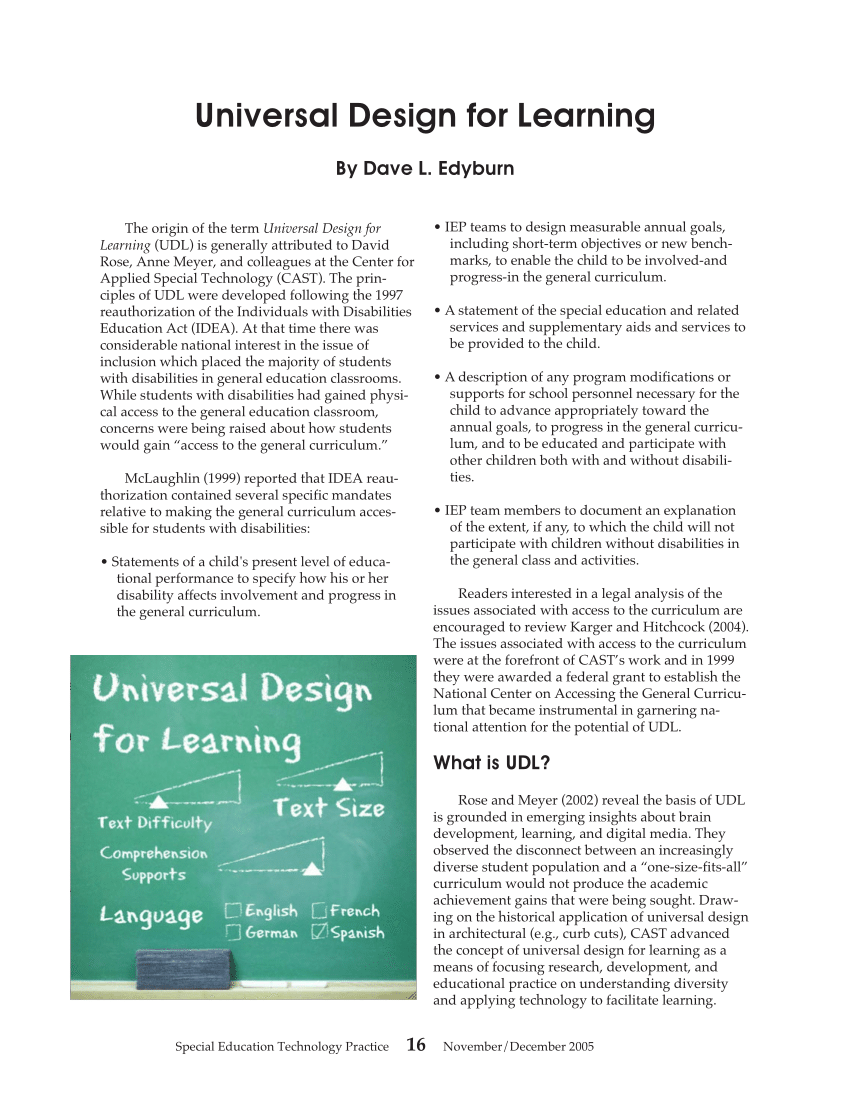
The importance of universal course design cannot be overstated, as it represents a foundational principle for ensuring equitable access and inclusive learning environments. Moreover, universal design not only benefits students with disabilities but also enhances the overall learning experience for all learners, promoting engagement, participation, and academic success. Embracing universal design principles in course development and instruction is not just a matter of compliance but a commitment to equity, diversity, and excellence in education. Universal Design for Learning (UDL) is a framework that guides educators in designing learning experiences that meet the needs of all learners. It helps teachers move from a one-size-fits-all approach toward one that adapts to learner variability. UDL embraces the idea that we should have firm goals for students—using flexible means to reach those goals.
Create Your Course
You can see some great examples of flexible seating by clicking here. Fidget toys are a great way for kids to release that pent-up energy and help them maintain focus and engaged in learning. They may be particularly beneficial for children with special needs.
Today there are more books than ever before for children that are racially diverse. Teachers can maximize the benefits of inclusion by selecting instructional materials and classroom decorations that match the characteristics of the students they are teaching. Engagement is highly individualized for each student and is based on both physical and cultural differences.
Now that you know a little more about what the UDL framework is and how this strategy can give your students more personalized support, let’s discuss how to get started. You can use the following strategies to incorporate Universal Design for Learning tools into your classroom. You ultimately want to foster an inclusive learning environment where the content can be delivered to suit every student's learning needs.
He has trained kindergarten teachers in 8 countries and helped businessmen and women open baby centers and kindergartens in 3 countries. According to UDL, anything that can help students become more engaged in a lesson will improve their motivation and deepen their interest. When talking about holidays, teachers can include special occasions from other religions.
Make sure that children in your classroom feel comfortable and safe bringing their whole selves—including their race, heritage, gender identity, and disabilities—into your classroom and address bias. One simple but effective way to do so is by stocking your classroom library with books that reflect your students’ diverse backgrounds and experiences. For example, imagine a lesson in which your students read about the stages of butterfly metamorphosis and then draw a diagram of the process.
With geographical dispersion in online learning offering your students various ways to gather online together and with you as the instructor. Offer online office hours, an AMA (ask me anything) session, and perhaps encourage students to form their own study groups, as these are highly motivating. Create an introductory activity as soon as a user signs up for your course. This is when their excitement and willingness to learn is at its peak. Ask students to reflect on their own learning goals for the course and what success looks like for them.
UDL is based on brain science and evidence-based educational practices. Learn more about the Universal Design for Learning framework from CAST. The UDL Guidelines can be used by educators, curriculum developers, researchers, parents, and anyone else who wants to implement the UDL framework in a learning environment. After all, full accessibility for all learners sounds like an impossible task. Some educators may feel overwhelmed or unsure how to start, while others may fear that UDL will sacrifice the quality of the whole for the benefit of a few. But in practice, UDL can streamline instructor labor by providing an intentional framework for course planning and by reducing the need for later remediation.